
How to Create Characters for Historical Fiction
Build a cast for historical fiction using photographs, records and research, then give each character a goal and a place in the story.
Last updated November 2026
Contents7
A convincing cast begins with people who want things, face limits and make choices within a particular time and place. Start with a photograph, letter or record, ask what it can actually show, and use other sources to learn about the world around it. Then invent the private hopes and conflicts that the evidence cannot supply.
Your characters can be real people, invented people, or a mix of both. The task is to give each one a reason to be in the story and a life beyond the historical event that brings the cast together.
Start with a person in a source
A photograph can suggest a scene: a crowded platform, a woman carrying a case, or a worker looking away from the camera. Before naming the people or giving them motives, study the image as evidence. A picture has a maker and a purpose; it captures a selected moment, not a whole life.
Use this process to turn a find into a story question:
- Record the source, date, place and creator if known. Note any gaps.
- List what is visible without guessing: clothes, objects, posture and surroundings.
- Write separate questions about what you cannot see. Who is waiting? Where might they be going?
- Check a map, newspaper or other record from the same place and period for context.
- Mark the point where documented detail ends and your imagined scene begins.
The Library of Congress explains how historians compare sources and test evidence in a 2014 blog post. Sources may agree, differ or leave useful questions open. A newspaper account can also have its own viewpoint, so treat it as another piece of evidence rather than a final answer.
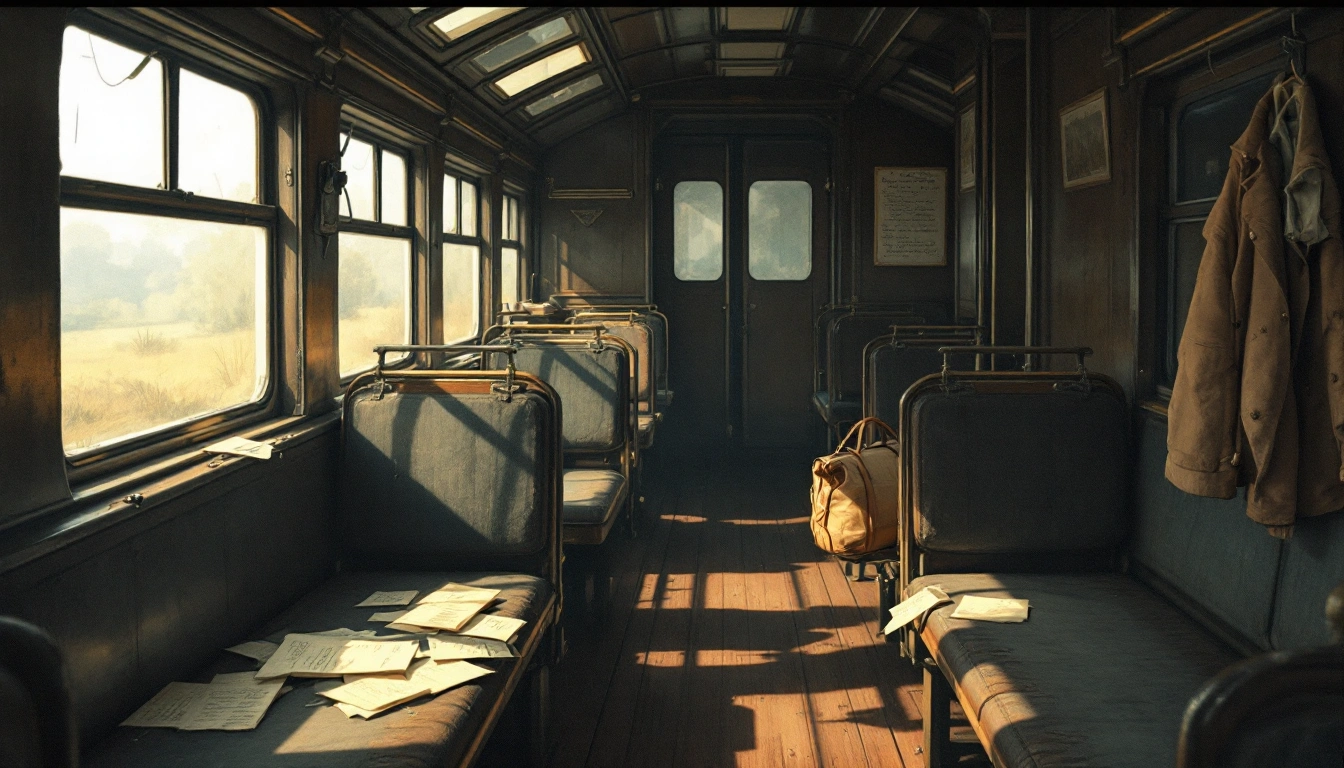
Try a small exercise. Imagine an undated picture of passengers with bags. The bags are visible; a family quarrel is not. A timetable might establish where a train could go, but it cannot prove why a particular passenger boarded. You may invent a quarrel for a fictional traveler while keeping that difference clear in your notes.
Find the people around the event
A public event reaches people in different ways. A journey, for example, involves passengers, porters, crew, relatives and people waiting at the destination. Their jobs and ties can place them in the same scene without making them all witnesses to the same facts.
Build a cast from the event outward:
- Name the event and the place where your story meets it.
- List the work needed to make that event happen and the people affected by it.
- Pick a central character with a reason to be there.
- Add a person who can help, hinder or change that character's plan.
- Give each person a concern that exists outside the event.
For instance, a station worker may need to keep a job while helping a passenger find a lost bag. The passenger may care less about the bag itself than the letter inside. These are invented choices, not claims about an actual journey. Their competing needs give the scene a shape before any famous person enters it.
A wide cast does not require a speech from everyone. A brief encounter can show who has access to a room or who must wait outside. Let a small part do one clear job in the scene, and return to it only if that person matters again.
Choose real, invented or composite characters
A real person's known life gives you dates, relationships and actions to work with. It can also leave long gaps. An invented person gives you more room to shape a plot, but still needs to fit the conditions of the time. A composite combines details from more than one person into a new character; keep track of what you have combined.
The Historical Novel Society's discussion of theme and character, published in 2004, considers both historical and fictional figures as ways to explore a novel's themes. Your choice depends on whose experience can best carry the story you want to tell. Set your own rule for each book about how you will use real and invented people.
Use these steps before drafting a real person:
- Make a timeline of documented actions and where they took place.
- Note which claims come from the person's own account and which come from others.
- Mark gaps where a conversation, thought or small action would be invented.
- Test the scene against what is known, including dates and relationships.
- Keep a note of substantial changes to explain to readers later.
Do not assume a surviving account is neutral. In a university discussion of historical fiction, writers describe working with records while recognizing that a person's own journal can present a self-serving view. For The Naturalist, Thom Conroy used a real explorer’s travel account for the timeline and cast, then imagined details of his personal life. Read a source for what its author wanted to convey as well as for the facts it contains.
Give each person a life beyond the plot
A character needs more than a period costume and a job title. Give the person a desire, a duty, a fear and a habit, then decide which of those will matter under pressure. People in the same household may disagree about duty or see the same event in different ways.
Try this character sketch:
- Write what the person wants today in one sentence.
- Name someone who can help or prevent it.
- Identify a duty, resource or rule that affects the choice.
- Give the person a private concern they would rather hide.
- Put the person in a scene where two wants cannot both be met.
For a fictional passenger, the immediate want might be a seat near a sick sister. The obstacle could be a ticket that puts them in separate cars. The choice is whether to ask for help, break a rule or accept the split. The scene tells us about the relationship through action, without a paragraph explaining the passenger's character.
Avoid making one person stand for everyone in a class, occupation or community. Look for differences in age, resources, beliefs and personal ties within your cast. Research those differences for your chosen place and date; do not assume that choices open to you today were open to everyone then.
Use records to test daily life
Look beyond major events for details that affect a person's day: work hours, travel, household arrangements, money and access to education. A detail matters most when it changes what a person can do. A route may determine whether a letter arrives in time; a job may decide who can leave home.
Census records can help suggest a household or occupation, but they are snapshots shaped by the questions asked. The UK National Archives guide to census records explains what its records contain and how to search them. Use the guide for the relevant place and period rather than assuming every census asked the same questions.
Keep a simple research log as you work:
- Write the question, such as how a worker reached a station.
- Save the source title, link or archive reference, creator and date.
- Record what the source says and the place and years it covers.
- Label your inference separately from the evidence.
- Mark unresolved points for another source or for a change to the scene.
A gap in records is not proof that something never happened. When evidence is thin, narrow the claim, leave the detail out or invent within what the available evidence permits. An author's note can explain an important choice without interrupting the story.
Write scenes and dialogue from a limited view
People act on what they know at the time, not on the ending a writer can see. Decide what news has reached each character and what remains uncertain. A person may misunderstand an event, trust a false rumor or make a sensible plan that later fails.
For a scene with several viewpoints:
- Choose the person whose choice drives the scene.
- List what that person knows at its opening.
- Give another character a different piece of knowledge or a different aim.
- Write the exchange around an action, such as finding a seat or sending a message.
- Remove facts the viewpoint character could not yet know.
Read letters, diaries and other accounts for patterns of speech, but remember that a letter is not a transcript of a casual talk. Select a few words or forms that suit the speaker and can be understood from context. Read dialogue aloud: if the reader must decode every sentence, the exchange may lose its force.
For another way to study how a setting shapes action, read our guide to Erskine Childers and The Riddle of the Sands. Our Ian Fleming writing guide offers a separate exercise in choosing details that affect a scene. Both sit in the wider Classics collection.
Revise the cast against the evidence
When the draft is complete, read it once for character and once for history. A well-sourced scene can still be dull if nobody has a choice to make. An exciting scene can still depend on a date, route or relationship that needs correction.
- Follow each major character's goal from first appearance to last.
- Mark scenes where a person exists only to explain history; give them an aim or remove the scene.
- Check dates, locations and encounters involving real people against your notes.
- Check material details that the plot depends on, not just decorative ones.
- Ask a knowledgeable reader where the story feels uncertain or too neat, then review the evidence.
- Write an author's note identifying major inventions and changes to the record.
Questions people also ask
Can a historical novel have an entirely fictional cast?
Yes. Invented people can live through a researched setting and events without meeting a famous historical figure.
Should every character speak in old-fashioned language?
No. Clear speech with carefully chosen period words can suggest a time and place without making every line hard to read.
How many characters does a historical novel need?
There is no fixed number. Start with the people needed to carry the conflict, then add others when they change the action or deepen a relationship.