
7 Best Greek Mythology Books for Every Kind of Reader in 2026
As an Amazon Associate, this website earns from qualifying purchases.
The short answer
Start with one readable collection of the myths, such as Edith Hamilton's Mythology or Stephen Fry's Mythos, then move to a modern retelling you enjoy, and only then to Homer and Ovid in a recent translation.
Last updated September 2026
Contents18
- #1. Edith Hamilton, Mythology (1942): Best classic first collection
- #2. Stephen Fry, Mythos (2017): Best entertaining first collection
- #3. Ingri and Edgar Parin d'Aulaire, D'Aulaires' Book of Greek Myths (1962): Best pick for children
- #4. Robert Graves, The Greek Myths (1955): Best reference for going deeper
- #5. Madeline Miller, Circe (2018): Best modern novel retelling
- #6. Homer, The Odyssey, translated by Emily Wilson (2017): Best modern translation of the Odyssey
- #7. Homer, The Odyssey, translated by Robert Fagles (1996): Best grander alternative translation
- Factors to consider when choosing greek mythology books
- Retelling versus the original: choosing Greek mythology books
- Other collections and novels worth knowing about
- The ancient sources, in readable translations
- Reference books for going deeper
- Greek mythology books for children and teens
- Three reading paths through Greek mythology books
- The names you'll meet in every Greek mythology book
- Common mistakes with Greek mythology books
- More in this guide
- Verdict
Our top 7 picks
- 1Best classic first collection
 Mythology by Edith Hamilton
- By Edith Hamilton, first published in 1942
- Retells the Greek, Roman and Norse myths
- Subtitled Timeless Tales of Gods and Heroes
- 2Best entertaining first collection
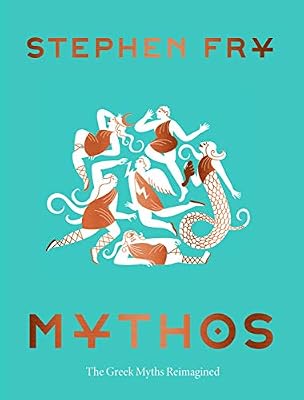 Mythos by Stephen Fry
- By Stephen Fry, first published in 2017
- A modern retelling of the Greek myths for adults
- Book 1 of Fry's Greek myths series
- 3Best pick for children
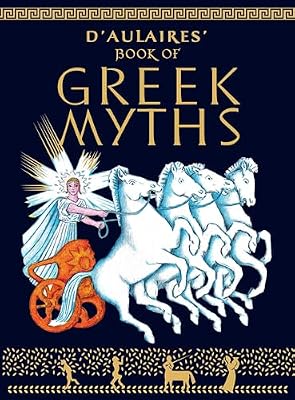 D'Aulaires' Book of Greek Myths
- By Ingri and Edgar Parin d'Aulaire, first published in 1962
- Illustrated retelling of the Greek myths for children
- Also popular with adult beginners
- 4Best reference for going deeper
 The Greek Myths by Robert Graves (Penguin Classics Deluxe Edition)
- By Robert Graves, first published in 1955
- Reference retelling with source notes for each myth
- Penguin Classics Deluxe Edition
- 5Best modern novel retelling
 Circe by Madeline Miller
- By Madeline Miller, first published in 2018
- A novel told by the witch Circe from the Odyssey
- 6Best modern translation of the Odyssey
 The Odyssey, translated by Emily Wilson
- Homer's epic of Odysseus's journey home
- Translated by Emily Wilson (2017) in plain verse
- W. W. Norton paperback
- 7Best grander alternative translation
 The Odyssey, translated by Robert Fagles (Penguin Classics)
- Homer's epic of Odysseus's journey home
- Translated by Robert Fagles, introduction by Bernard Knox
- Penguin Classics paperback
Greek mythology books fall into four groups. Collections tell the myths in order. Modern novels retell one story in depth. The ancient poems and plays are the original sources. Reference books collect and compare all of it. Each group suits a different reader. This hub names the picks most readers start with, in order, and explains where the wider reading path leads next.
TL;DR: start with one collection of the myths, either Edith Hamilton's Mythology or Stephen Fry's Mythos. Then read a modern retelling such as Madeline Miller's Circe. When the names feel familiar, read The Odyssey in Emily Wilson's or Robert Fagles's translation. Children can start with D'Aulaires' Book of Greek Myths.
We picked these from the collections, novels and translations that come up again and again on this hub's own reading paths, favoring the books most new readers reach for first.
#1. Edith Hamilton, Mythology (1942): Best classic first collection
Our verdict:
Best classic first collection
Best for readers who want a reliable, well-organized first collection.
View on Amazon- By Edith Hamilton, first published in 1942
- Retells the Greek, Roman and Norse myths
- Subtitled Timeless Tales of Gods and Heroes
Keep in mind: the prose can feel formal next to livelier modern retellings.
Product details checked September 2026
This has been the classroom standard for decades. It covers Greek, Roman and Norse myths in clear, orderly prose. Short notes say which ancient writer each story comes from. It can feel a little formal, but it's accurate and complete.
#2. Stephen Fry, Mythos (2017): Best entertaining first collection
Our verdict:
Best entertaining first collection
Best for readers who want the myths told with jokes and asides.
View on Amazon- By Stephen Fry, first published in 2017
- A modern retelling of the Greek myths for adults
- Book 1 of Fry's Greek myths series
Keep in mind: it's the first of four Fry books, so it only covers the creation stories and the early lives of the gods.
Product details checked September 2026
A lively retelling of the creation myths and the stories of the gods, told with jokes and asides. Fry followed it with Heroes (2018), Troy (2020) and Odyssey (2024). Together they take you through the heroic age.
#3. Ingri and Edgar Parin d'Aulaire, D'Aulaires' Book of Greek Myths (1962): Best pick for children
D'Aulaires' Book of Greek Myths
Our verdict:
Best pick for children
Best for parents looking for an illustrated first mythology book.
View on Amazon- By Ingri and Edgar Parin d'Aulaire, first published in 1962
- Illustrated retelling of the Greek myths for children
- Also popular with adult beginners
Keep in mind: the stories are short summaries, so older teens will want a fuller collection later.
Product details checked September 2026
This is the best-known illustrated collection for young readers. Many adults remember it as their own first mythology book. It covers the main gods and heroes without talking down to readers.
#4. Robert Graves, The Greek Myths (1955): Best reference for going deeper
The Greek Myths by Robert Graves (Penguin Classics Deluxe Edition)
Our verdict:
Best reference for going deeper
Best for readers who already know the stories and want the source references.
View on Amazon- By Robert Graves, first published in 1955
- Reference retelling with source notes for each myth
- Penguin Classics Deluxe Edition
Keep in mind: Graves's own theories about what the myths mean are disputed by scholars.
Product details checked September 2026
This is a large, numbered collection of every version of each myth, with references to the ancient sources. It's a rich resource. Graves's own theories about what the myths mean are widely disputed, though. Read it after a simpler collection.
#5. Madeline Miller, Circe (2018): Best modern novel retelling
Our verdict:
Best modern novel retelling
Best for readers who know the basics and want a novel-length retelling.
View on Amazon- By Madeline Miller, first published in 2018
- A novel told by the witch Circe from the Odyssey
Keep in mind: it retells one figure's story, so it works best after a general collection.
Product details checked September 2026
The witch of The Odyssey tells her own life, from her childhood among the Titans to her island exile. It's the novel most readers reach for once the myths feel familiar. It draws you toward Homer's poem directly.
#6. Homer, The Odyssey, translated by Emily Wilson (2017): Best modern translation of the Odyssey
The Odyssey, translated by Emily Wilson
Our verdict:
Best modern translation of the Odyssey
Best for readers ready for the ancient source itself in brisk modern English.
View on Amazon- Homer's epic of Odysseus's journey home
- Translated by Emily Wilson (2017) in plain verse
- W. W. Norton paperback
Keep in mind: it's still a long narrative poem, so it suits readers who already know the story.
Product details checked September 2026
This poem follows Odysseus's ten-year journey home from Troy. Wilson's translation is brisk and clear. It keeps to the same number of lines as the Greek, which makes it the most readable modern version.
#7. Homer, The Odyssey, translated by Robert Fagles (1996): Best grander alternative translation
The Odyssey, translated by Robert Fagles (Penguin Classics)
Our verdict:
Best grander alternative translation
Best for readers who want a fuller, more expansive telling of the same poem.
View on Amazon- Homer's epic of Odysseus's journey home
- Translated by Robert Fagles, introduction by Bernard Knox
- Penguin Classics paperback
Keep in mind: it runs longer per line than Wilson's version, so it reads a little slower.
Product details checked September 2026
Fagles's version is the other common choice. It's grander and a little freer than Wilson's. Both come with good introductions, so it's worth reading a page of each before you buy.
Factors to consider when choosing greek mythology books
Knowing which kind of book you're holding saves a lot of frustration. A reader who wanted stories, and bought a scholarly handbook, will give up fast. A reader who wanted the real thing, and bought a light retelling, will feel short-changed.
Collections retell the major myths in one volume. They usually run from the creation of the world through the Trojan War and the wanderings of Odysseus. They're the best first book. Novels and retellings take one myth, or one character, and tell it at novel length.
The ancient sources are the poems and plays the myths come from: Homer, Hesiod, the Athenian tragedians and the Roman poet Ovid. Reference books collect and compare the ancient versions of each myth, with notes on where each detail comes from. They suit readers who have already read a collection.
For the collections and novels above, any complete edition is fine. For the ancient texts, the translator matters a great deal.
- Check the translator's name. A listing that doesn't name the translator often uses an old public-domain version. Those can be stiff and archaic.
- Compare the first page. Most online stores and library apps let you preview. Read the opening lines of two translations. Pick the one you want to keep reading.
- Prefer an edition with notes and a glossary of names. Greek myth has a lot of characters with similar names. A good index saves constant searching.
- Consider audio for Homer. The poems were composed to be heard. A strong narrator can make The Odyssey easier to follow than the page. Our best audiobooks hub covers where to find unabridged editions.
Retelling versus the original: choosing Greek mythology books
Greek mythology has no single original book. The stories come from many ancient writers, including Homer, Hesiod, the Athenian playwrights and the Roman poet Ovid. They often disagree. A collection puts those versions in order.
That's why a retelling makes a better first read. The ancient texts become far more enjoyable afterwards.
Other collections and novels worth knowing about
- Thomas Bulfinch, The Age of Fable (1855). Often sold as Bulfinch's Mythology. It's public domain and free online. The style is Victorian, and it uses Roman names for the gods. It works better as a free sampler than as a first choice.
- Madeline Miller, The Song of Achilles (2011). The Trojan War through the eyes of Patroclus, Achilles's companion. It won the Orange Prize for Fiction in 2012.
- Natalie Haynes, A Thousand Ships (2019). The Trojan War told by the women on both sides. Haynes also wrote Stone Blind (2022), a retelling of the Medusa story. She also wrote Pandora's Jar (2020), a nonfiction look at the women of Greek myth.
- Pat Barker, The Silence of the Girls (2018). The Iliad from the viewpoint of Briseis, a captured Trojan queen.
If you enjoy one of these, read the ancient source it draws on next. The contrast is part of the pleasure.
The ancient sources, in readable translations
The myths come from a small group of ancient texts. You don't need to read them all. Start with The Odyssey. It's the most story-driven.
- Homer, The Iliad. A few weeks near the end of the Trojan War, built around the anger of Achilles. Wilson (2023), Fagles (1990) and Richmond Lattimore (1951) are the translations you'll see recommended most.
- Hesiod, Theogony. A short poem on the birth of the gods and the war between the Olympians and the Titans. It's the closest thing to an official family tree. The Oxford World's Classics edition pairs it with Works and Days.
- Ovid, Metamorphoses. A Latin poem of about 250 transformation myths, from Daphne and Apollo to Pygmalion. It's the source many later painters and poets used. Stephanie McCarter's 2022 Penguin Classics translation is a strong recent version.
- The Greek tragedies. Aeschylus's Oresteia, Sophocles's Oedipus Rex and Antigone, and Euripides's Medea tell the darkest family stories in myth. They're short. They read quickly in a modern translation.
Reference books for going deeper
- Robin Hard, The Routledge Handbook of Greek Mythology. A detailed, source-by-source handbook, developed from H. J. Rose's older standard handbook. It's the best single reference for serious readers.
- Richard Buxton, The Complete World of Greek Mythology (Thames & Hudson). Heavily illustrated with ancient art, and good on how the myths worked in Greek life.
- Apollodorus, The Library. An ancient summary of Greek myth, written much later than Homer. It's dry but useful as a quick checklist of who did what.
Greek mythology books for children and teens
- Rick Riordan, Percy Jackson and the Olympians. A five-book series that begins with The Lightning Thief (2005). Modern kids discover they are children of the Greek gods. It's the most common gateway to the myths for readers around ages 9 to 13.
- Rick Riordan, Percy Jackson's Greek Gods (2014). The myths themselves, retold in Percy's joking voice. A good bridge between the novels and a proper collection.
- Donna Jo Napoli, Treasury of Greek Mythology (National Geographic). An illustrated family collection with short sidebars on history and geography.
Three reading paths through Greek mythology books
The story path. Read Mythos, then The Song of Achilles, then Circe, then The Odyssey in Wilson's translation. This is the most enjoyable route for readers who mainly want stories.
The classic path. Read Edith Hamilton's Mythology, then The Odyssey, then The Iliad, then a volume of Greek tragedy. This is the route most school and university courses follow.
The women-of-myth path. Read Natalie Haynes's Pandora's Jar, then A Thousand Ships, then The Silence of the Girls, then Euripides's Medea and The Trojan Women. This path shows how differently the same stories look from the other side.
The names you'll meet in every Greek mythology book
Every collection covers the same core cast. Knowing these names before you start makes any book easier to follow.
- The Titans. The older generation of gods. Cronus rules them until his son Zeus overthrows him.
- The Olympians. Zeus, Hera, Poseidon, Demeter, Athena, Apollo, Artemis, Ares, Aphrodite, Hephaestus, Hermes, and either Hestia or Dionysus depending on the source. Hades is Zeus's brother but lives in the underworld, not on Olympus.
- The heroes. Heracles (Hercules in Latin), Perseus, Theseus, Jason and the Argonauts, and the fighters of the Trojan War: Achilles, Hector, Agamemnon and Odysseus.
- The great families. The house of Atreus (Agamemnon's family) and the house of Thebes (Oedipus's family) supply most of the tragedies.
Common mistakes with Greek mythology books
- Starting with The Iliad. It's a great poem, but it assumes you already know the story of the war. Start with a collection or The Odyssey instead.
- Mixing Roman and Greek names without noticing. Older books call Zeus "Jupiter" and Odysseus "Ulysses". Check which names a book uses before you buy it for a child doing Greek myths at school.
- Treating a novel as the original. Retellings change details on purpose. Enjoy them, but don't quote them in an essay as what the myth "really" says.
More in this guide
Alongside the mythology guides above, this hub groups a set of spoke pages. They cover national literatures and anthologies, plus one more mythology pick guide. They're here for readers who want to follow classical influence into later books. Each one stands on its own.
- American Literature: A Reader's Guide to the Major Periods
- 7 Best American Classic Novels to Read First
- 6 Best American Poets to Read First
- English Literature: Where to Start, Period by Period, and the Editions to Buy
- British Literature: A Reader's Guide by Period
- Victorian Literature: A Reader's Guide to the Novels and Poets
- The Norton Anthology of English Literature: Volumes, Editions and Who It's For
- 8 Best Russian Books to Read First
- Russian Literature: A Reader's Guide From Pushkin to Solzhenitsyn
- Modern Classics: What Counts, and 12 to Start With
Verdict
The best greek mythology books for most readers come in order. Start with one collection, either Edith Hamilton's Mythology or Stephen Fry's Mythos. Add one modern novel, Circe. Then read The Odyssey in Emily Wilson's or Robert Fagles's translation.
Children can start with D'Aulaires'. Save the scholarly handbooks for when you want to know where every version of a myth comes from.
Our picks in this topic

7 picks
7 Best American Classic Novels to Read First in 2026
Seven American classic novels in a sensible reading order, from The Great Gatsby and Of Mice and Men to Moby-Dick, with the edition to buy for each.

6 picks
6 Best American Poets to Read First in 2026
Walt Whitman, Emily Dickinson, Robert Frost, Langston Hughes, Elizabeth Bishop and Mary Oliver: where to start with each poet and which collection to buy.

8 picks
8 Best Russian Books to Read First in 2026
Eight Russian classics in a sensible reading order, from Chekhov's stories and Anna Karenina to War and Peace, with the translation to choose for each.
Questions people also ask
What's the best first Greek mythology book?
A single-volume collection that tells the main myths in order. Edith Hamilton's Mythology (1942) is the long-standing classroom choice. Stephen Fry's Mythos (2017) is chattier and funnier. Either gives you the gods, the family tree and the famous stories before you move on to novels or to Homer.
Should I read Homer before the retellings?
No. The retellings make Homer easier, not the other way round. Knowing who Agamemnon, Achilles and Odysseus are before you start The Iliad means you can enjoy the poem instead of tracking names. Read a collection, then a novel or two, then Homer.
Which translation of The Odyssey should I read?
Emily Wilson's 2017 translation is the most readable modern version and keeps to the same number of lines as the Greek. Robert Fagles's 1996 translation is grander and a little freer. Both come with good introductions. Try a page of each before you buy.
Are Roman myths the same as Greek myths?
They overlap heavily. The Romans adopted many Greek gods under new names: Zeus became Jupiter, Hera became Juno, Aphrodite became Venus. Ovid's Metamorphoses is a Latin poem, but it retells many Greek myths and is one of the main sources later writers used. Older English books often use the Roman names, which confuses new readers.
What are good Greek mythology books for kids?
D'Aulaires' Book of Greek Myths (1962) is the classic picture-book collection for younger children. Rick Riordan's Percy Jackson novels, starting with The Lightning Thief (2005), suit middle-grade readers and often lead them to the original myths. Riordan's Percy Jackson's Greek Gods retells the myths directly in the same voice.
Is Robert Graves's The Greek Myths reliable?
It's thorough, with numbered sources for each myth, and it's still widely read. But many of Graves's explanations of what the myths mean are his own theories, and scholars have long disputed them. Use it for the stories and the source references, and treat the commentary as one writer's opinion.
Why does this hub also cover American, Russian and English literature?
The site groups several national-literature guides here alongside the mythology guides. They're linked at the end of this page. If you only want myths, the collections, novels and translations above are the whole of what you need.