
6 Best American Poets to Read First in 2026
As an Amazon Associate, this website earns from qualifying purchases.
The short answer
Start with Emily Dickinson and Walt Whitman, then read Robert Frost and Langston Hughes. Buy a selected edition of each rather than a giant complete poems.
Last updated September 2026
Contents10
- #1. Walt Whitman (1819 to 1892): Best expansive founder
- #2. Emily Dickinson (1830 to 1886): Best compressed founder
- #3. Robert Frost (1874 to 1963): Best plain-spoken formalist
- #4. Langston Hughes (1901 to 1967): Best introduction to the Harlem Renaissance
- #5. Elizabeth Bishop (1911 to 1979): Best pick for careful description
- #6. Mary Oliver (1935 to 2019): Best contemporary entry point
- Factors to consider when choosing american poets to read
- Why American poets are taught in pairs
- How to read a poem you don't understand yet
- Verdict
Our top 6 picks
- 1Best expansive founder
 Leaves of Grass: The First (1855) Edition (Penguin Classics)
- Poems by Walt Whitman
- The first 1855 edition, before later revisions
- Penguin Classics paperback
- 2Best compressed founder
 The Selected Poems of Emily Dickinson (Modern Library)
- Poems by Emily Dickinson (1830 to 1886)
- Modern Library Classics paperback
- A selection, not the complete poems
- 3Best plain-spoken formalist
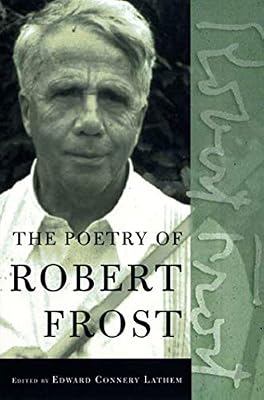 The Poetry of Robert Frost: The Collected Poems
- Poems by Robert Frost (1874 to 1963)
- The collected poems in one volume
- Paperback
- 4Best introduction to the Harlem Renaissance
 Selected Poems of Langston Hughes (Vintage Classics)
- Poems by Langston Hughes (1901 to 1967)
- A selection chosen by Hughes himself
- Vintage Classics paperback
- 5Best pick for careful description
 Poems by Elizabeth Bishop
- Poems by Elizabeth Bishop (1911 to 1979)
- Collects her published poems in one volume
- Farrar, Straus and Giroux paperback
- 6Best contemporary entry point
 Devotions: The Selected Poems of Mary Oliver
- Poems by Mary Oliver (1935 to 2019)
- A selection she made from more than fifty years of work
- Penguin Press edition
The american poets most readers start with are Walt Whitman and Emily Dickinson. After them come Robert Frost, Langston Hughes, Elizabeth Bishop and Mary Oliver. Between them they cover nearly two centuries and most of the ways a poem can work. This page gives a short introduction to each, where to begin, and which collection to buy. It's part of our Greek mythology books hub, which groups guides to American, English and Russian literature.
TL;DR: start with Emily Dickinson and Walt Whitman in selected editions. Then read Robert Frost for plain speech and strict form, and Langston Hughes for the music of the Harlem Renaissance. Elizabeth Bishop and Mary Oliver bring you into the later 20th century. Read a few poems at a time, slowly and aloud.
#1. Walt Whitman (1819 to 1892): Best expansive founder
Leaves of Grass: The First (1855) Edition (Penguin Classics)
Our verdict:
Best expansive founder
Best for readers who want big, open-hearted, unrhymed lines.
View on Amazon- Poems by Walt Whitman
- The first 1855 edition, before later revisions
- Penguin Classics paperback
Keep in mind: the language is 19th-century and some poems in the full book run very long.
Product details checked September 2026
Whitman first published Leaves of Grass in 1855. He kept revising and expanding it for the rest of his life. His long, unrhymed lines celebrate ordinary people and the busy life of cities. Start with "Song of Myself", the long poem at the heart of the book.
The 1855 first edition has just twelve untitled poems. It's short, fresh and a good first book.
#2. Emily Dickinson (1830 to 1886): Best compressed founder
The Selected Poems of Emily Dickinson (Modern Library)
Our verdict:
Best compressed founder
Best for readers who like short, dense poems that reward rereading.
View on Amazon- Poems by Emily Dickinson (1830 to 1886)
- Modern Library Classics paperback
- A selection, not the complete poems
Keep in mind: the dashes and slant rhymes take some getting used to.
Product details checked September 2026
Dickinson wrote nearly 1,800 poems, collected after her death. Only a handful were published in her lifetime. Her poems are short, with dashes, slant rhymes and sudden turns.
Start with "Because I could not stop for Death" and "Hope is the thing with feathers". Read them slowly. A single stanza often holds several meanings.
#3. Robert Frost (1874 to 1963): Best plain-spoken formalist
The Poetry of Robert Frost: The Collected Poems
Our verdict:
Best plain-spoken formalist
Best for readers who like traditional meter and rhyme.
View on Amazon- Poems by Robert Frost (1874 to 1963)
- The collected poems in one volume
- Paperback
Keep in mind: the plain surface can hide darker meanings that are easy to miss on a first read.
Product details checked September 2026
Frost wrote in traditional meter and rhyme, about New England farms and woods, in language that sounds like speech. He won four Pulitzer Prizes for Poetry. Start with "Stopping by Woods on a Snowy Evening", "Mending Wall" and "The Road Not Taken". Notice how the simple surface hides darker thoughts.
#4. Langston Hughes (1901 to 1967): Best introduction to the Harlem Renaissance
Selected Poems of Langston Hughes (Vintage Classics)
Our verdict:
Best introduction to the Harlem Renaissance
Best for readers who want short, direct, musical poems.
View on Amazon- Poems by Langston Hughes (1901 to 1967)
- A selection chosen by Hughes himself
- Vintage Classics paperback
Keep in mind: the selected edition covers only a portion of his large body of work.
Product details checked September 2026
Hughes was a leading voice of the Harlem Renaissance. He brought the rhythms of blues and jazz into poetry. Start with "The Negro Speaks of Rivers", "Harlem" and "I, Too". His poems are short and direct. That makes him one of the easiest poets on this list to begin with.
#5. Elizabeth Bishop (1911 to 1979): Best pick for careful description
Our verdict:
Best pick for careful description
Best for readers who like precise, patient poems about travel and loss.
View on Amazon- Poems by Elizabeth Bishop (1911 to 1979)
- Collects her published poems in one volume
- Farrar, Straus and Giroux paperback
Keep in mind: she published relatively few poems, so the collection is shorter than the others here.
Product details checked September 2026
Bishop wrote precise, patient poems about travel and loss. She published relatively few of them. Start with "The Fish" and "One Art", a villanelle about losing things. She's a good choice for readers who like careful description.
#6. Mary Oliver (1935 to 2019): Best contemporary entry point
Devotions: The Selected Poems of Mary Oliver
Our verdict:
Best contemporary entry point
Best for readers who don't usually read poetry.
View on Amazon- Poems by Mary Oliver (1935 to 2019)
- A selection she made from more than fifty years of work
- Penguin Press edition
Keep in mind: her plain language is a change of pace from the earlier, more traditional poets on this list.
Product details checked September 2026
Oliver wrote about nature, attention and ordinary days, in clear language. She reaches readers who don't usually read poetry. She won the Pulitzer Prize for Poetry in 1984. Start with "Wild Geese" and "The Summer Day". Devotions (2017) is her own selection from across her career.
Factors to consider when choosing american poets to read
For Whitman, Dickinson, Hughes and Oliver, a selected edition is the right first purchase. It gathers the poems that classrooms return to, in a manageable book. Frost and Bishop wrote fewer poems. Their standard one-volume collections, linked above, work as a first book too.
Complete editions of Whitman or Dickinson are wonderful but large. They bury the famous poems among hundreds of minor ones. For Dickinson, check which text an edition uses. Modern editions restore her original dashes and capitals, which older ones "corrected".
Why American poets are taught in pairs
Whitman and Dickinson are the classic pairing. He is expansive and public. She is compressed and private.
Teachers set them side by side because the contrast shows what a poem can do. Frost and Hughes make a similar pair in the 20th century. One works in traditional New England form. The other brings Black vernacular and music into the poem. Reading in pairs helps you notice style.
How to read a poem you don't understand yet
- Say it aloud once, without stopping. Get the sound before the meaning.
- Go through it again, slowly. Mark any line that surprises you.
- Find the turn. Many short poems change direction partway through. Frost's and Dickinson's often turn in the last stanza.
- Leave it and come back. Good poems often make more sense the next day.
Verdict
The american poets to start with are Emily Dickinson and Walt Whitman, followed by Robert Frost and Langston Hughes. Buy a selected or one-volume edition of each. Read a few poems at a time, and add Elizabeth Bishop and Mary Oliver when you want later voices. For the novels of the same periods, see our guide to American classic novels.
Questions people also ask
Why start with Whitman and Dickinson?
They are the two founders of a distinctly American poetry. They wrote in almost opposite ways. Whitman used long, open lines addressed to everyone. Dickinson wrote short, compressed lyrics she mostly kept to herself. Reading both shows the range everything after them works within.
Is poetry harder to read than novels?
It asks for a different pace, not more effort. Read a poem slowly, then read it again, ideally aloud. Starting with a handful of short poems works better than reading a collection cover to cover.
Should I buy complete poems or selected poems?
Selected poems for a first book. A selection gathers the most taught pieces in a book you can carry. Complete editions of Dickinson or Frost run to hundreds of poems. They suit readers who already love the poet.
Who are the most important contemporary American poets?
Lists vary, but recent US Poets Laureate are a good place to look. The Library of Congress keeps the full list. Each laureate's own collections make a natural next step after the six poets on this page.