
9 Best Classic Books for Beginners and Where to Actually Start in 2026
As an Amazon Associate, this website earns from qualifying purchases.
The short answer
Start with a short, plot-driven classic, Frankenstein or The Adventures of Tom Sawyer, in an annotated paperback edition, not a leather-bound gift set or the free public-domain text.
Last updated September 2026
Contents18
- #1. Frankenstein: Best first classic overall
- #2. The Adventures of Tom Sawyer: Best low-commitment classic
- #3. The Strange Case of Dr Jekyll and Mr Hyde: Best short classic if you know the twist
- #4. A Christmas Carol: Best entry into Dickens
- #5. Pride and Prejudice: Best dialogue-driven classic
- #6. The Adventures of Sherlock Holmes: Best classic for short bursts
- #7. 1984: Best bridge into 20th-century classics
- #8. Animal Farm: Best classic for one sitting
- #9. Frankenstein: Best annotated edition once you're hooked
- Factors to consider when choosing the best classic books for beginners
- How to use this order
- Which edition should you actually buy
- If you already read one of these in school
- Free and public-domain options worth knowing about
- Building a starter shelf of classic books for beginners
- Mistakes that stall a first attempt at classic literature
- Follow a first book into an author
- Verdict
Our top 9 picks
- 1Best first classic overall
 Frankenstein: The 1818 Text (Penguin Classics)
- By Mary Shelley
- The original 1818 text, before Shelley's 1831 revisions
- Penguin Classics paperback
- 2Best low-commitment classic
 The Adventures of Tom Sawyer (Penguin Classics)
- By Mark Twain, first published in 1876
- Penguin Classics paperback
- Set in a Mississippi River town
- 3Best short classic if you know the twist
 Strange Case of Dr Jekyll and Mr Hyde and Other Tales of Terror (Penguin Classics)
- By Robert Louis Stevenson, first published in 1886
- Penguin Classics paperback with other short tales
- The novella itself is short
- 4Best entry into Dickens
 A Christmas Carol and Other Christmas Writings (Penguin Classics)
- By Charles Dickens, first published in 1843
- Penguin Classics paperback
- Includes other Christmas stories
- 5Best dialogue-driven classic
 Pride and Prejudice (Penguin Classics)
- By Jane Austen, first published in 1813
- Penguin Classics paperback
- Includes an introduction and notes
- 6Best classic for short bursts
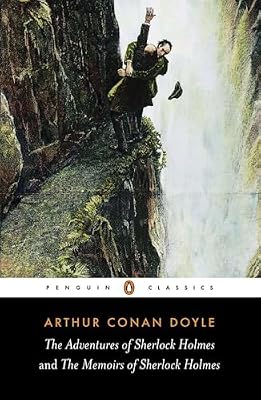 The Adventures and The Memoirs of Sherlock Holmes (Penguin Classics)
- By Arthur Conan Doyle, first collected in 1892 and 1894
- Two story collections in one volume
- Penguin Classics paperback
- 7Best bridge into 20th-century classics
 1984 by George Orwell (Signet Classics)
- By George Orwell, first published in 1949
- Signet Classics paperback
- About 328 pages
- 8Best classic for one sitting
 Animal Farm (Signet Classics)
- By George Orwell, first published in 1945
- Signet Classics paperback
- About 140 pages
- 9Best annotated edition once you're hooked
 Frankenstein (Norton Critical Edition)
- By Mary Shelley, first published in 1818
- Norton Critical Edition with notes and critical essays
- Paperback
"Best classic books" lists run long. They can list a hundred titles, from The Odyssey to Beloved. They rarely say where to start. Where you start matters most. It decides whether classic literature becomes a habit, or a one-time school memory.
This guide uses a real order instead. Eight titles run from short and plot-driven to your first real challenge, plus one upgrade pick once you're hooked. Pick the next book on this list, not the top of some huge one.
This page starts our classics hub. It covers where to go next.
TL;DR: the best classic books for beginners are short and plot-driven. They are not the longest or most praised titles on a "greatest books" list. Start with Frankenstein or The Adventures of Tom Sawyer. Buy an annotated paperback edition. Then read Pride and Prejudice and 1984, before a long, demanding classic. Try a title free or at the library first.
#1. Frankenstein: Best first classic overall
Frankenstein: The 1818 Text (Penguin Classics)
Our verdict:
Best first classic overall
Best for readers who want a short, plot-driven start.
View on Amazon- By Mary Shelley
- The original 1818 text, before Shelley's 1831 revisions
- Penguin Classics paperback
Keep in mind: the moral question at its core runs deeper than the horror label suggests.
Product details checked September 2026
Mary Shelley wrote this novel in 1818, and the full text is free at Project Gutenberg if you want to try it before buying an edition. It is short and plot-driven. Most readers already know the story's shape, so the prose itself is the only new part. The core question, what a creator owes its creation, still grips readers today.
#2. The Adventures of Tom Sawyer: Best low-commitment classic
The Adventures of Tom Sawyer (Penguin Classics)
Our verdict:
Best low-commitment classic
Best for readers who want to read a chapter at a time.
View on Amazon- By Mark Twain, first published in 1876
- Penguin Classics paperback
- Set in a Mississippi River town
Keep in mind: it has less driving plot than Frankenstein or Jekyll and Hyde.
Product details checked September 2026
Mark Twain wrote this novel in 1876. It is episodic and funny. Each chapter stands mostly on its own. You never need to hold a big cast in your head.
#3. The Strange Case of Dr Jekyll and Mr Hyde: Best short classic if you know the twist
Strange Case of Dr Jekyll and Mr Hyde and Other Tales of Terror (Penguin Classics)
Our verdict:
Best short classic if you know the twist
Best for readers who want a very short classic that reads like a modern novella.
View on Amazon- By Robert Louis Stevenson, first published in 1886
- Penguin Classics paperback with other short tales
- The novella itself is short
Keep in mind: most readers already know the twist, so the draw is mood, not surprise.
Product details checked September 2026
Robert Louis Stevenson wrote this short novel in 1886. It reads almost like a modern novella. Most readers already know the twist going in. The point is the mood and the prose, not the surprise.
#4. A Christmas Carol: Best entry into Dickens
A Christmas Carol and Other Christmas Writings (Penguin Classics)
Our verdict:
Best entry into Dickens
Best for readers who find Dickens's longer novels intimidating.
View on Amazon- By Charles Dickens, first published in 1843
- Penguin Classics paperback
- Includes other Christmas stories
Keep in mind: it eases you in, but his longer books still ask for more patience.
Product details checked September 2026
Charles Dickens wrote this story in 1843. It is his most approachable book. The familiar ghost-story shape carries you through his denser sentences.
#5. Pride and Prejudice: Best dialogue-driven classic
Pride and Prejudice (Penguin Classics)
Our verdict:
Best dialogue-driven classic
Best for readers who want to test whether dialogue-driven fiction suits them.
View on Amazon- By Jane Austen, first published in 1813
- Penguin Classics paperback
- Includes an introduction and notes
Keep in mind: the tone and social context take a chapter or two to click.
Product details checked September 2026
Jane Austen wrote this novel in 1813. It is the best first Austen to try. Most of its difficulty is tone, not hard vocabulary.
#6. The Adventures of Sherlock Holmes: Best classic for short bursts
The Adventures and The Memoirs of Sherlock Holmes (Penguin Classics)
Our verdict:
Best classic for short bursts
Best for readers who want to set the book down for days at a time.
View on Amazon- By Arthur Conan Doyle, first collected in 1892 and 1894
- Two story collections in one volume
- Penguin Classics paperback
Keep in mind: as a story collection it has less pull than one long novel.
Product details checked September 2026
Arthur Conan Doyle wrote these linked stories in 1892. You can read one case at a time. Setting the book down for a few days never breaks the thread.
#7. 1984: Best bridge into 20th-century classics
1984 by George Orwell (Signet Classics)
Our verdict:
Best bridge into 20th-century classics
Best for readers ready to move past 19th-century prose.
View on Amazon- By George Orwell, first published in 1949
- Signet Classics paperback
- About 328 pages
Keep in mind: the plot feels modern, but the ending is bleak on purpose.
Product details checked September 2026
George Orwell wrote this novel in 1949. Its English and plot feel closer to today's books. It works well as a bridge into more demanding 20th-century classics.
#8. Animal Farm: Best classic for one sitting
Our verdict:
Best classic for one sitting
Best for readers who want a short classic to pair with 1984.
View on Amazon- By George Orwell, first published in 1945
- Signet Classics paperback
- About 140 pages
Keep in mind: its short length leaves less room to settle in than a full novel.
Product details checked September 2026
George Orwell wrote this fable in 1945. It is short enough to finish in one sitting. Read it before or after 1984; the two don't depend on each other.
#9. Frankenstein: Best annotated edition once you're hooked
Frankenstein (Norton Critical Edition)
Our verdict:
Best annotated edition once you're hooked
Best for readers who want footnotes and a short introduction.
View on Amazon- By Mary Shelley, first published in 1818
- Norton Critical Edition with notes and critical essays
- Paperback
Keep in mind: it costs more than a free text or a plain paperback.
Product details checked September 2026
The text of Frankenstein stays the same in any edition. What changes is the footnotes, the introduction, and the print quality. That's worth choosing on purpose, once a first read has already hooked you.
Factors to consider when choosing the best classic books for beginners
A few questions narrow the list fast.
- How much plot do you need? Frankenstein, Tom Sawyer and Jekyll and Hyde carry you on story alone. Pride and Prejudice and Sherlock Holmes ask a little more patience.
- Do you want notes? An annotated edition explains old references and words. A plain text works once the prose rhythm feels familiar.
- Print or audio? Short, plot-driven classics work well as audiobooks for a first try, since a good narrator carries you past old sentence rhythms.
- New copy, used copy, or free text? The words never change. A used or free copy reads exactly the same as a new annotated one, minus the footnotes.
How to use this order
You don't need all eight titles before moving to a longer classic. Three or four is enough to know if the habit sticks. Pick one short title from the first four. Add one dialogue-driven classic, Austen or Doyle.
Then decide: more 19th-century prose, or Orwell's more modern rhythm? If a title on this list doesn't land, the next one is a genuinely different read, not just another old book.
Notice which kind of "difficulty" actually stopped you. The eight titles above are not interchangeable. If hard vocabulary was the problem, try an annotated edition of the same book. If it was length or a big cast, pick a shorter book here, not a longer one by the same author. If the plot itself lost you, try a different title instead of pushing through.
Which edition should you actually buy
| Edition type | Best for | What you get | What you don't |
|---|---|---|---|
| Annotated paperback (Penguin Classics, Norton Critical) | A first-time reader of this specific title | Footnotes, a short critical introduction, reliable proofreading | Nice binding, illustrations |
| Clothbound / leather-bound gift edition | Buying to keep or give as a gift | Durable binding, sometimes a slipcase | No added context beyond the base text |
| Free public-domain e-book (Project Gutenberg, Kindle) | A second or third classic, budget-conscious readers | The full unabridged text, free | No footnotes; transcription quality varies |
| Unabridged audiobook (Audible, Kindle Unlimited) | Commutes, readers who prefer listening | Full text, professional narration | No footnotes; harder to skim back through |
Scroll for more →
Prices vary by retailer and edition. Check current pricing before you buy.
None of these nine picks began life in another language. Translation is not a factor yet. It becomes one once you move on to Don Quixote, Tolstoy, or Dostoevsky.
A modern translation is usually the easier and more accurate read. An old one is often in print only because it's free of copyright. Check a book's decade before you assume an old translation is a bargain.
If you already read one of these in school
Plenty of readers skip a title on this list for one reason. They read it too early, under time pressure, for a test, not for fun. Tom Sawyer, A Christmas Carol, and Animal Farm are common school assignments. Reading one again as an adult, at your own pace, feels very different. If a school memory is the only reason a title feels dull, give it one more try.
Free and public-domain options worth knowing about
Not every free edition is equal. Project Gutenberg hosts the biggest, most reliable library of free classics. It builds its texts from old print editions. Standard Ebooks re-sets a smaller set of the same texts, with cleaner formatting.
For listening, LibriVox offers free, volunteer-read audiobooks of public-domain classics. Narration quality varies by reader, so try a sample chapter first. None of these free sources carry footnotes or an introduction. That's the main thing you give up next to a paid annotated edition.
Building a starter shelf of classic books for beginners
You could commit to a small stack instead of one title. Four or five of the eight titles above make a solid starter shelf. That's enough range in length and tone to learn your taste, without the cost of a full boxed set.
Public libraries carry most of these titles in several editions, including audio. That's a good way to try a title before you buy your own copy. Secondhand copies are worth a look too. A classic's text never changes, so a used paperback reads exactly like a new one.
Mistakes that stall a first attempt at classic literature
- Starting with the "greatest" classic instead of the easiest one. War and Peace or Ulysses being important doesn't make either a good first pick. Save them for later.
- Buying a gift edition for looks, then finding it has no notes. A nice binding and useful notes are different things. Check which one you actually need.
- Treating a slow start as proof the book, or you, failed. Old prose reads slower for the first chapter or two. Most readers adjust well before halfway.
- Reading only the free text on a first try. It's a fine copy, but rough formatting can make an unfamiliar style feel harder than it is.
Follow a first book into an author
After a first Austen novel, compare the six completed novels before choosing the next one. Readers who want adventure can follow Stevenson's Treasure Island reading notes, then decide whether to continue with Kidnapped or switch to a travel account.
Verdict
There's no single correct order for reading classic books. But there is a correct starting difficulty: short and plot-driven before long and demanding. The best classic books for beginners on this page are Frankenstein and The Adventures of Tom Sawyer, not 1984 or Pride and Prejudice. Step up to the annotated edition once the habit sticks. The goal with a first classic is finishing it, and wanting another one.
Questions people also ask
What's the actual first classic I should read?
Something short with a strong plot engine: Frankenstein, The Adventures of Tom Sawyer, or The Strange Case of Dr Jekyll and Mr Hyde all work well as a first classic because the story carries you past unfamiliar 19th-century prose rhythms.
Should I buy an annotated edition or just get the free text?
For a first classic, an annotated edition is worth the modest extra cost. Footnotes that explain a period reference or an archaic word remove friction that has nothing to do with whether you'll enjoy the book: the free public-domain text is a fine second or third classic, once you're used to the prose.
Is it okay to start with an abridged version?
For a handful of very long, digression-heavy classics, yes, as long as the edition clearly says 'abridged' on the cover. For most of the titles on this beginner path, the unabridged edition isn't meaningfully harder, so there's no real reason to abridge them.
How long should I expect a first classic to take to read?
Plan on longer than a contemporary novel of the same page count. Older prose, unfamiliar vocabulary and, in translated works, a translator's own rhythm all slow a first read down. A short classic that would take an evening as a modern novel might reasonably take a week; that's normal, not a sign you're reading it wrong.
Do I need to read classics in publication order?
No. Publication order groups titles by era, not by how approachable they are. A short, plot-driven classic from any period is a better start than a long, structurally demanding one from an earlier century, regardless of which came first.
What if I start a classic and don't like it?
Put it down and try a different one from this list rather than forcing your way through. One mismatched classic isn't evidence that classic literature 'isn't for you'; it's usually evidence that title wasn't the right entry point.