
Percy Bysshe Shelley's Alastor: Where to Read the Poem
Read Shelley's Alastor, or The Spirit of Solitude: when he wrote it, what his preface says it is about, and where to read the full text free.
Last updated October 2026
Contents6
Alastor; or, The Spirit of Solitude is a poem of about 720 lines by Percy Bysshe Shelley. It follows a young poet who leaves home in search of a vision of perfect sympathy and dies without finding it. Shelley wrote a short preface to explain what he meant, so you can read the poem with his own summary beside it.
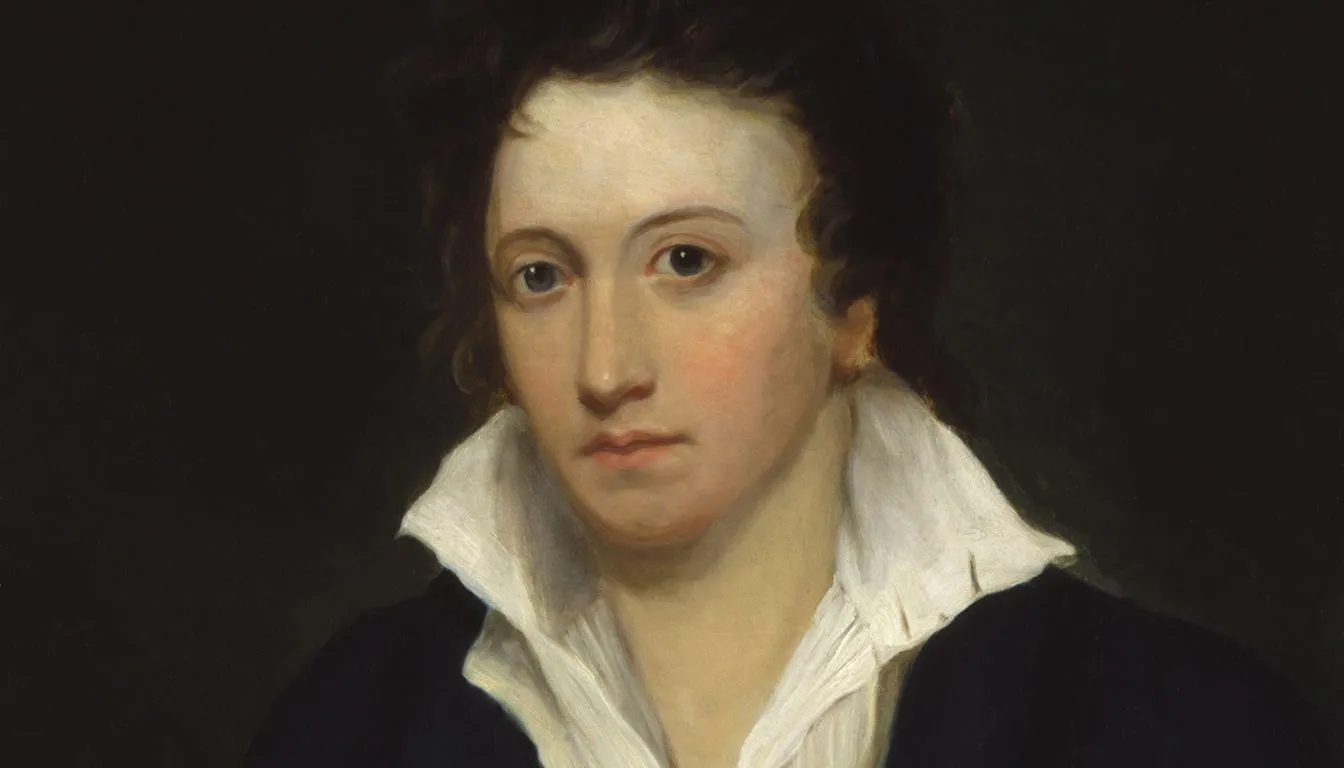
Image note: This is a portrait of Shelley, painted by Alfred Clint after Amelia Curran's 1819 portrait. Wikimedia Commons marks it public domain; cropped and resized.

When and where Shelley wrote it
The collected edition edited by Thomas Hutchinson says Shelley composed Alastor in the autumn of 1815 at Bishopsgate Heath, near Windsor Park. It was published in March 1816 as the title piece of a slim volume of poems, by Baldwin, Cradock and Joy of London. When the first edition sold out, the poem was reprinted in the Posthumous Poems of 1824.
Mary Shelley wrote a note on the poem for later editions. She says Shelley rented a house on the edge of Windsor Forest in the summer of 1815, made a river trip by wherry from Windsor towards Cricklade, and wrote Alastor when he came back. She says the woodland of Windsor Great Park lies behind the forest scenes in the poem.
What the preface says
The preface is dated December 14, 1815. Shelley calls the poem allegorical. A young poet, whose imagination has been fed by nature and learning, grows restless and longs for a companion who matches his own mind. He imagines such a being, searches for her, fails to find her and dies young.
Shelley then adds a warning to the story. He says people who keep away from human sympathy altogether have their own curse, and the preface ends with a line about those whose hearts are dry. It is a short, direct statement of what he thought the poem was doing, and it is worth reading first.
What happens in the poem
The poem opens with an address to Earth, Ocean and Air, then turns to the poet's story. He travels through Arabia and on to the vale of Cashmire, where he dreams of a veiled maid. After he wakes he goes looking for her. Near the shore he finds a small boat, gets in and is carried across open water toward the Caucasus. The rest of the poem follows that drift and the poet's death, then closes on a passage about loss.
Mary Shelley's note calls the poem didactic rather than narrative: it is an outpouring of Shelley's own feelings in an ideal setting, not a plot-driven tale. Read it for the voice and the landscape.
Where to read Alastor
Project Gutenberg has Hutchinson's edition of Shelley's complete poetical works. Alastor is in Volume 1, with the 1815 preface and Mary Shelley's note. Its record gives the title, the editor and U.S. public-domain status, and asks readers outside the United States to check local law.
- Project Gutenberg eBook 4797, The Complete Poetical Works of Percy Bysshe Shelley, Volume 1
- Plain text of Volume 1
- Alastor on Wikisource, Hutchinson edition (1914)
These are an editor's texts based on the 1816 volume and the later editions he lists, so line wording can differ from other printings.
Read it with other Shelley-circle books
Mary Shelley's novel is the better-known book from the same household. Start with our Frankenstein and classic titles section if you want to go from the poem to the novel. To check which other public-domain titles have a free Gutenberg record, use the public-domain classics availability atlas.
Verdict
Read Alastor if you want an early Shelley poem with its author's own preface attached. It is short, it is free to read, and the preface tells you exactly what he meant by it. Expect a solemn poem about solitude and longing, not a novelistic adventure.